Many repair shops diagnose mini-split failures superficially. A system that won’t cool might get a compressor replacement when the actual problem is a blocked expansion device. A system that cycles on and off might be labeled a capacitor failure when the real issue is insufficient refrigerant.
Guardian Solutions Plus uses systematic diagnostics:
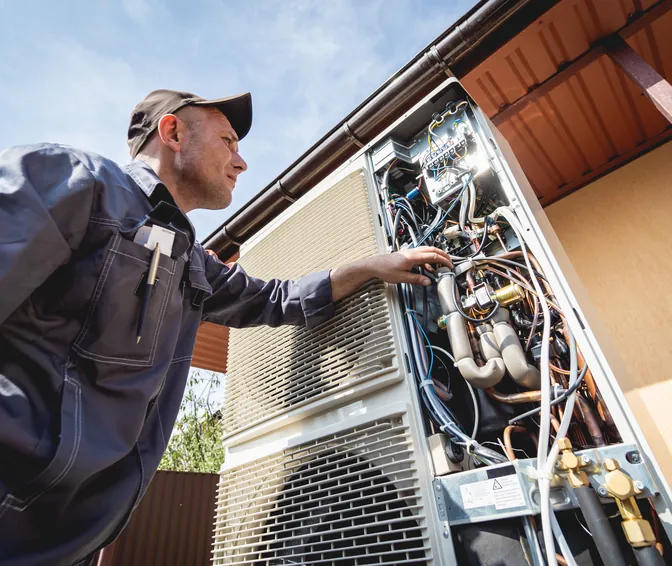
Step 1: Listen & Inspect — We hear your description and how the system behaves. We look at physical condition, check for visible leaks, assess installation quality, and inspect both units for impact damage or corrosion. Visual clues often point directly to the problem.
Step 2: Electrical Testing — We verify power supply voltage, test thermostat signals, check control board status, and measure compressor startup current. We test capacitors and verify low-voltage signal wiring integrity. Electrical faults are identified early in the diagnosis.
Step 3: Refrigerant Analysis — We measure system pressures and calculate superheat and subcooling values to determine exact refrigerant charge. These readings reveal whether refrigerant is at the right level and whether the system operates in its design envelope.
Step 4: Performance Measurement — We measure actual temperature outputs, calculate temperature differentials across coils, and assess airflow. Poor cooling with normal pressures often indicates dirty coils, blocked filters, or a refrigerant metering issue.
Step 5: Component Testing — We test individual components: compressor amp draw, fan motor operation, solenoid valve function, and sensor operation. We measure capacitor capacitance to confirm proper charge storage. This isolates which component is failing and prevents replacing three parts when one is broken.
This depth of diagnosis prevents expensive mistakes. When we say a compressor is bad, we’re certain because we’ve ruled out upstream problems. When we say it’s a sensor, we’ve tested it directly. Our diagnosis saves money by avoiding unnecessary component replacement.